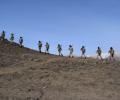
Mountain brigades being raised by India are mostly meant for the Chinese border, especially the Tibetan plateau, and it is perhaps the first time a Chinese military expert publicly complimented their strength and strategic importance.

The onus today is on China, but it also requires a little diplomatic finesse from India, backed by a modernised armed force, argues BJP MP Subramanian Swamy in this excerpt from his new book, Himalayan Challenge: India, China And The Quest For Peace.
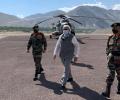
As the China factor enters the body politic of India with greater potency, its consequences will certainly be far-reaching, note Harsh V Pant and Vinay Kaura.

China plans to divert about 200 billion cubic metres of water annually from the Brahmaputra at its highest point, namely the Great Bend, where it turns into India. China's Brahmaputra dam will severely impact India, warns former senior RA&W officer and China expert Jayadeva Ranade.

Pakistan's offer to normalise relations with India is an attempt to buy temporary peace due to its economic and politico-strategic compulsions, notes Brigadier Narender Kumar (retd).

By jettisoning the vision of multilateral world in favour of a Han Empire, China has posed a major long term challenge to India. India must stand firm against Chinese expansionism but also keep a door open for future detente by making a clear distinction between Chinese people and the current Chinese leadership, observe Lieutenant General Ashok Joshi (Retd) and Colonel Anil Athale (Retd).
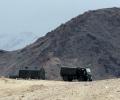
'When the adversary has tasted what you can do, he is going to be more experienced in countering how the Indians think.' 'He will go back, rework and come back.'

'Clearly, there is a wide gap between the stated intentions of China's top leadership to improve relations with India and the PLA's aggressive border management,' says Brigadier Gurmeet Kanwal (retd).

The BDCA is yet another dose of insidious placebos administered on the people of India by their own government that has been in perpetual denial over the steady incremental loss of strategic Indian territory, says R N Ravi

Friedman was participating in a session on India Outlook at the World Economic Forum in Davos on Wednesday where Finance Minister P Chidambaram was present.

'It will be a repeated folly to ever think that China will not attack us.'

The Bogibeel Bridge, which was a part of the Assam Accord and sanctioned in 1997-98, is likely to play a crucial role in defence movement along the India-China border in Arunachal Pradesh.
Another round of diplomatic talks under the framework of the Working Mechanism for Consultation and Coordination is expected to be scheduled soon.

Though General Naravane's visit will not deal with 'impermanent' issues like the changing stands of politicians, it will certainly reinforce the deeper 'permanent' links between the people of Nepal and India. Time will hopefully tackle the present impermanence of the Sino-Nepalese romance, notes Claude Arpi.
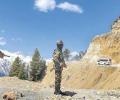
'India is not going to accept whatever the Chinese say. That is not going to happen.'

'Even at Galwan Valley, our soldiers are now not allowed to patrol at the point at which they used to patrol earlier. In the Pangong area, in a more than eight-kilometre area they are not allowing us to patrol, the area which we used to patrol. Previously, we used to patrol till Finger 8 and now we are not being allowed to patrol till Finger 8'

'The Chinese staying put in Pangong Tso, and creating a buffer zone on Indian territory in other areas,' a senior serving general tells Ajai Shukla.
'Indian diplomacy faltered amidst multiple failures of statecraft.' 'The functionaries responsible must be held to account for their abject failure,' asserts Ambassador M K Bhadrakumar.
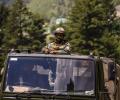
He said that following a build-up of troops, multiple transgressions and attempts to unilaterally change facts on the ground by China, there have been several levels of talks and a fair amount of communication to ensure that the matter can be resolved through negotiation and diplomacy.
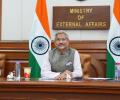
The BRICS stressed on resolution of conflicts in a declaration issued after a virtual meeting of foreign ministers of the member nations of the grouping. The meeting was attended by External Affairs Minister S Jaishankar and his Chinese counterpart Wang Yi.
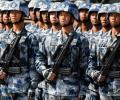
Chinese military has also deployed a sizeable number of its troops in Galwan Valley, the site of the violent clashes on June 15 that left 20 Indian soldiers dead.

'Open conflict would be a disaster for both China and India.'

Sources said Wang is primarily visiting India to hold boundary talks with National Security Advisor Ajit Doval.

New Delhi must clearly demonstrate to Beijing that China will pay a price for its relentless strategic undermining of India, says Ajai Shukla.

'Our defence services are in a position to checkmate any Chinese adventurism.'

Modi along with Assam Governor Jagdish Mukhi and Chief Minister Sarbananda Sonowal also walked a few metres on the bridge.
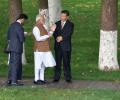
'The meeting marks the first tentative step in the effort to understand whether the two largest Asian nations can co-exist peacefully while realising their aspirations.' 'Caution and watchful wariness will dominate the effort of both sides,' says Jayadeva Ranade, former RA&W officer and China expert.
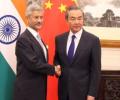
Wang said the two sides should follow the important consensus reached by the leaders of the two countries and strengthen the communication and coordination on the proper handling of the border situation through the existing channels so as to jointly maintain peace and tranquility in the border area, the Chinese foreign ministry said in a statement.
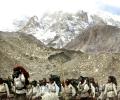
The Indian Army will continue to maintain its aggressive posturing in all disputed areas in eastern Ladakh and will not back off till status quo is maintained, sources said.

In the review meeting, Singh told the top military brass to continue to deal with the situation in eastern Ladakh and other areas with "firmness".

'The border stand-off and the uncertainties that come with it should be a wake-up call on what makes for real rather than illusory power,' observes T N Ninan.
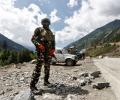
At a virtual media briefing, Ministry of External Affairs (MEA) Spokesperson Anurag Srivastava said disengagement of troops is a complex process which would require mutually agreed 'reciprocal actions'.

Xi will attend the second informal meeting with Modi at Mahabalipuram near Chennai from October 11 to 12 and pay a state visit to Nepal on October 13, Foreign Ministry spokesperson Hua Chunying announced on Wednesday.

'If the situation escalates, then mini-scale firing might happen.'

If the Ladakh episode has ended, this is the time to find the truth about all the aspects of it and inform the nation and the world, the time is here and now, advises Ambassador T P Sreenivasan.
'India needs to closely monitor the discussions at the UNSC and make counter-measures as this touches its core interests', points out Srikanth Kondapalli.

May emphasise that the country is back on the fiscal consolidation path by reining in fiscal deficit at 5.2%.
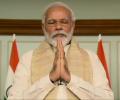
In a statement, the Prime Minister's Office (PMO) said the focus of Modi's remarks at the meeting on Friday was the events of June 15 at Galwan that led to the loss of lives of 20 Indian military personnel.

Four Chinese soldiers were killed in the fierce clash with the Indian Army in the Galwan Valley in eastern Ladakh in June last year, the People's Liberation Army (PLA) acknowledged for the first time on Friday.
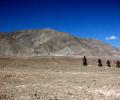
While the de-escalation process was underway, a violent face-off took place on Monday night between Indian and Chinese troops leading to the death of 20 Indian soldiers.
